
General Information - Manitoba Courts
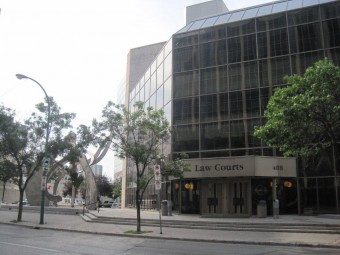
Court Proceedings are generally open to the public. Sometimes you will not be allowed into a court proceeding because of a law or rule of the court that does not permit you to have access. For example, child protection hearings are not open to the public under The Child and Family Services Act. Also some court proceedings that are designed to try and resolve issues between the parties to the case with the assistance of a judge, such as Case Conferences, will not be open for the public to attend. You will also not be allowed to attend a court proceeding if the judge has made an order banning the public from the courtroom. This happens rarely.
When you attend court, you can expect to see news reporters too. They are allowed to attend and report upon the court case.
If you are attending court as a witness, you may wish to contact the Victim/Witness Assistance Program of the Manitoba Department of Justice at (204) 945-3594 or toll free at 1-800-282-8069 (ext. 3594), for information about your role as a witness in a court proceeding. If you are attending court as a juror or have been summoned to serve as a juror, click here for information about "Serving as a Juror".
If you want to find out the date, time and location of a particular court case, you should telephone the court office where the case is being held (see Court Locations (Court of Appeal), Court Locations (Court of King's Bench) or Court Locations (Provincial Court) for court office contact information).
If you do plan to attend a court proceeding, plan to arrive before the time when the court will start to ensure that you have a seat in the courtroom. When court is in session, you are free to enter and leave the courtroom when you wish, but to avoid unnecessary disruption to court proceedings, you may want to wait until there is a break or recess in the proceedings.
Please Note: No food or beverages are permitted in the courtrooms.
Members of the public may be able to record a proceeding but only if the court has given its permission. News reporters are allowed to have recording equipment in the courtroom to use in the place of their notes only - they cannot broadcast the recording. Most court proceedings in Manitoba are recorded by equipment operated by court clerks. A transcript of the proceedings can then be created from the recording. Court transcripts in Manitoba are produced by a contract transcription company, Royal Reporting, A Veritext Company.
Phone: (204) 306-9149
Fax: (204) 306-9154
Email: transcription-mb@veritext.com
In Manitoba, neither the public nor the media is permitted to have cameras (still/video) in the courtroom or court facility in general, unless prior permission of the court has been given. Usually this is permitted on ceremonial occasions of the court only, such as the swearing-in of a newly appointed judge of the court. Please review the Manitoba Courts Electronic Device Policy for directives on the presence and use of electronic devices within Manitoba Court facilities and courtrooms.
If you are wearing a hat when visiting the court, you will be asked by the court clerk to remove your hat when in the courtroom out of respect for the court.
As of January 4, 2011, the Courts Division of Manitoba Justice implemented a Scent-Free Workplace Policy. Members of the legal profession and the public, when planning to attend at court offices in Manitoba, are asked to please consider the following:
The Notice from Courts Division in regard to the Scent-Free Workplace Policy can be found here.
In all courthouses in Manitoba, security for the court is generally the responsibility of Sheriff Services but may also be provided by local policing agencies.
In Winnipeg, the Law Courts Complex at 408 York Avenue has perimeter security. This means that when entering the complex, you will be required to step through a metal detector and any bags and/or purses/briefcases you bring with you will be put through an x-ray device. This is similar to the security you would find at an airport.
In other court locations in Manitoba, similar security measures may be in place outside of a specific courtroom, if there is a concern for the safety of the public and court parties attending a particular court case.
In Winnipeg, groups of persons are welcome to tour the Law Courts Complex at 408 York Avenue. Tours can be arranged by emailing MBCourtsinquiry@gov.mb.ca. There is no charge for the tour, but tours are available on a limited basis. If you are a school teacher, click here for more detailed information about court tours and judicial speakers. For tours of courthouses located outside Winnipeg, contact the courthouse directly as to whether this service is available.
Court records, for the most part, are going to be open to members of the public to view and copy. Only a provision of a statute or an order or directive of the court can prevent a member of the public from viewing and copying court record information. Please review Policy: Access to Court Records in Manitoba, for further information.The provincial Freedom of Information and Protection of Privacy Act (FIPPA) and the companion Personal Health Information Act (PHIA) do not apply to records of the court.
Fees may apply for requests related to retrieving, copying, or certifying documents. A list of court services fees related to accessing court records is available here.
A request for information as to a person’s criminal record is to be directed to the appropriate policing agency. The court record concerning a person’s criminal proceedings before the court is not the person’s criminal record - it is a record of the criminal proceedings before the court involving that person.
The Provincial Court has a publicly accessible Judicial Authorization Registry which lists all applications made for judicial authorizations, including search warrants. The policy governing this registry can be found here (pdf).
When the court has ordered a ban on publication regarding a particular court file, this does not mean that access to the file will no longer be given, but prevents particular information contained in file documents or disclosed at a hearing in that case from being published. Bans on publication may be made in accordance with provisions set out in particular statutes, like the Criminal Code. For example, a ban on publication may prevent the publication of any information that would identify a witness or victim/complainant in a criminal case. A ban on publication may also prevent the publication of any details or evidence disclosed at a particular hearing, such as an application for judicial interim release or bail. It is also an offence to publish or broadcast any part of a trial when the jury is not present.